What the exhaust flue does
Your furnace burns gas, and the flue (exhaust vent) carries the combustion gases — including carbon monoxide — safely outside. As long as it’s sealed and routed correctly, those gases never enter your home.
How leaks happen
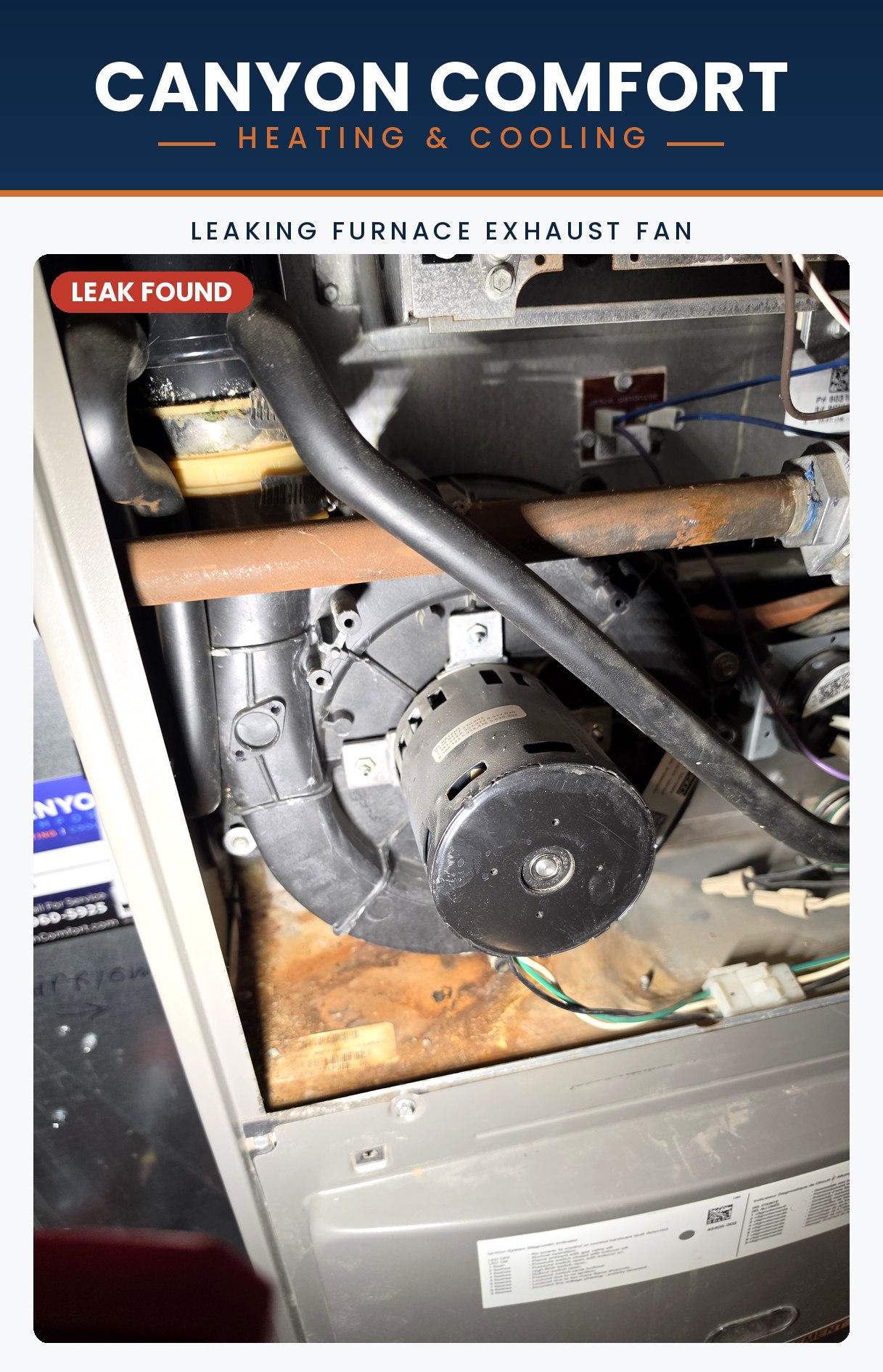
The gases can escape in a few places: a flue that has corroded, cracked, separated at a joint, or come disconnected; a cracked or rusted-through heat exchanger inside the furnace; or a leaking inducer (the exhaust fan that pushes the gases out) or its gasket. Some of it is age, some of it is a sloppy install — but the result is the same: combustion gas ending up where it never should.
Why it’s dangerous
Carbon monoxide is colorless and odorless. A leaking flue or heat exchanger can let it spill into your living space, which is a genuine health and safety risk — not something to put off. Working CO detectors are a must, but they’re the last line of defense, not the first.
Warning signs worth taking seriously
- A CO detector that alarms — get everyone out, then call 911 or the gas company from outside
- Soot or scorch marks around the furnace, burners, or flue pipe
- A burner flame that’s yellow or flickering instead of crisp and blue
- Headaches, dizziness, or nausea that ease when you leave the house
- A flue pipe that’s loose, rusted, or sagging instead of solidly connected and sloped up
Why we test for CO on every furnace
Before we call any furnace job complete, we inspect the flue and heat exchanger and test for carbon monoxide — then show you the readings. If we find a leak, we show you exactly where it is and what it’ll take to make it safe. That CO check is standard on every furnace repair and tune-up — never an add-on.
Get a straight answer
Tell us what’s going on and we’ll give you clear options and a straight, expert answer.